Tags   Posts tagged with “Music”

Music

 0  941

Richly Deserved
As singer John Grant’s painful past fuels his powerful autobiographical songs, his soul-searching work brings him closer to inner peace
by Dann Dulin

Photographed Exclusively for A&U by Sean Black
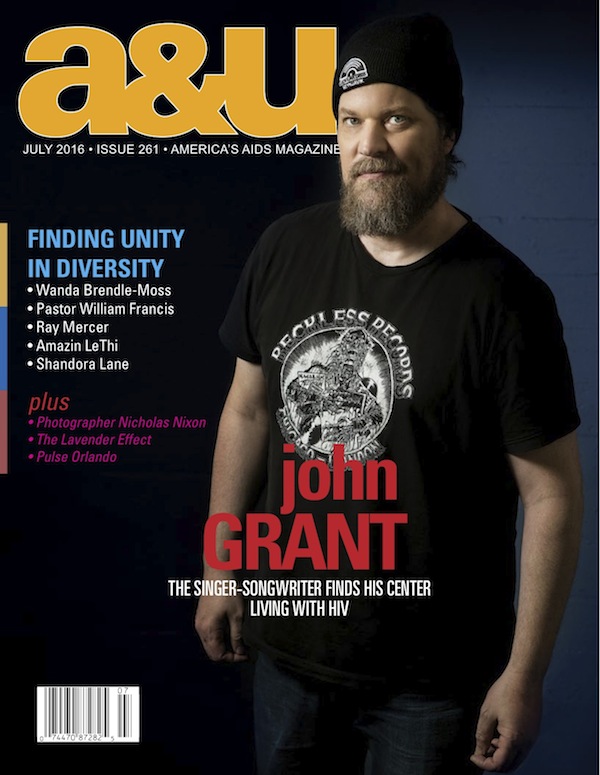
July 2016 Cover 2Discover Iceland’s Greatest National Resource…Icelandic Glaciers. This gigantic eye catching advertisement swiftly whizzes by, covering the entire length of a double-sized Los Angeles Metro bus. I’m seated at a cozy corner table at the Ace Hotel restaurant looking out on downtown traffic at 9th and South Broadway, waiting for the arrival of the eclectic singer, John Grant, who lives in Reykjavik, Iceland, where surely he has come to know about glaciers. “Glacier” is one of his popular songs about John’s struggles growing up gay, and he was recently joined on-stage by Kylie Minogue [A&U, February 2013] for a duet of the song in tribute to the victims of the Orlando masscre.

The musician is widely famous in Europe, not—yet—all that visible in the U.S. Currently on a national tour, John has collaborated with Elton John, Sinead O’Connor, Hercules & Love Affair, Tracey Thorn, and Alison Goldfrapp. He’s been called a “diarist of the human condition,” as his narrative songs are deeply personal. One reviewer wrote about his live performance, “Leaves his audience awestruck and on its feet.”

His folksy electronic pop-rock poetic music and his honest-to-the-core velvety baritone voice landed him a Best International Male Solo Artist nomination at the 2014 BRITS. Several of his songs have been used in films and TV shows, including the HBO series, Looking. Last year he released his third album, Grey Tickles, Black Pressure (an Icelandic expression meaning “midlife crisis”), following his debut album, Queen of Denmark (2010), and Pale Green Ghosts (2013). His current album debuted at #5 on the U.K. charts. The songwriter is a bookworm (just finished the Madeline Kahn biography), a horror fan (loves all the Exorcist films), and enjoys the music of Donna Summer and Karen Carpenter, his first inspiration.

Moments later, a Brit, Matt, Grant’s tour manager of three years, appears and escorts me backstage to John’s dressing room.

Grant performs tonight at The Ace Theatre, a majestic Spanish gothic superstructure built in 1927 by Mary Pickford, Douglas Fairbanks and Charlie Chaplain (originally known as the United Artists building). Several years ago the city talked about bulldozing the structure. What a pity it would’ve been to destroy such a sacred historical ornate relic. Pickford had it built as her own private screening room.

On entering John’s petite dressing room, there’s an immediate disarmingly magnetic quality aboutJohn Grant 1 web him, a warmth and softness that belies his ruggedly handsome bearlike appearance. He could be Zach Galifianakis’ brother. Though a stagehand is fussing about, along with his personal manager of many years, Fiona, Grant is serene. Matt introduces us and soon everyone departs. As he walks out the door, Matt tosses, “I’ll leave you guys to it.”
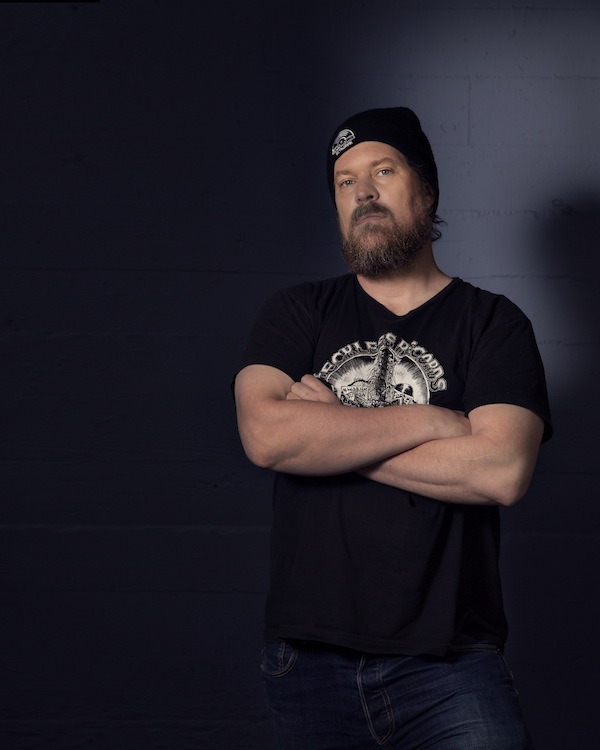
The musician is clad in dark blue jeans, a black T-shirt with a graphic of the Tokyo subway map, and a black knit hat that sports a small logo, Lucky Records Reykjavik. I quickly learn that the man doesn’t harbor secrets and is refreshingly raw.

Flipping through pages of an A&U issue I brought, John makes several comments until he stumbles on an article about Anjelica Huston. “Class act…,” he notes thoughtfully. “She has an interesting background, doesn’t she? I didn’t realize she was raised in Ireland. It’s on my radar to read her memoir.” He quickly scans over the story and repeats a byline, “No shame about being HIV positive…” He mulls it over a moment then slightly bristles.

“When I hear people telling me that I’ve gotten that disease because I’m a pervert who’s going to hell, I respond, ‘Oh, so my mother had Christian lung cancer?’ [His mother died of the illness in 1995.] There’s some serious non-loving going on there,” John points out, irritated by the obvious hypocritical flaw. “Ridiculous. Yeh, so what’s your fucking excuse [why you have a disease]?!” He clears his throat. “I’m just so surprised the way people act in this country,” he groans in somber disappointment, correcting himself, “Of course, it’s everywhere. Don’t get me started on Russia.”

I mention the homophobia on the island of Jamaica and Grant responds, “[Sometimes I feel like] I’m never going to be welcomed or considered a human being [there]. [But] I recently saw Gully Queens [Young and Gay: Jamaica’s Gully Queens on Viceland channel] about Jamaican homeless LGBTI youths. They blow my mind. The circumstances that people are thriving in and they find their way. They’re taking care of each other,” he avers, sitting on the edge of an Old World Luther-style crescent platform chair, with leather seat and back, enhancing his Viking appearance. His elbows are planted firmly on the chair’s arms, while his hands are folded in front of him. He maintains this defensive position most of the time.

I suffer from PTSD, due to the hatred and abuse I took for twenty years. I was rejected from outside the home and from inside the home. It left me crippled, battling addictions because the need to escape was so big

“I suffer from PTSD, due to the hatred and abuse I took for twenty years. I was rejected from outside the home and from inside the home. It left me crippled, battling addictions because the need to escape was so big.” He pauses. “I’m so ashamed sometimes, because I look at these kids, and in places like Russia and Jamaica, and they are thriving. But maybe they don’t have someone at home telling them they’re going to hell,” he says, “I don’t know….”

“I don’t want to be any different than I am, but I certainly don’t….” John doesn’t finish his thought and mumbles a few inaudible words. “My brain resets every day. When I get up, I set about writing [out] my thought processes. I experience a constant knee-jerk reaction by projecting the past onto the present where a lot of these dangers no longer exist, but I react as though I’m still in it. It’s understandable,” he attests, crossing his feet at the ankles. “But it’s not something I feel particularly proud of.”

Though he is forty-eight (this month), the bullying John experienced in his childhood is as fresh as the snow in winter. Raised in Buchanan, Michigan, his fundamentalist family moved to Parker, Colorado, when he was twelve. Badgered by kids at school for being gay and his lack of supportive parents (“Homosexuality was not an option!” he blurts) made him feel like an alien. The negative jabs of others seared him and over time, and he developed a massive dose of toxic shame. This led to twenty years of self -destruction, wrestling with drugs (mostly cocaine), alcohol, and eventually sex. He suffered from agoraphobia, panic attacks, anxiety, and depression as well. John lauds therapy, Paxil, and Alcoholics Anonymous as lifesavers, navigating his way to a healthier self.

A stagehand fleetingly pops in looking for Fiona. “Haven’t seen her,” replies John.
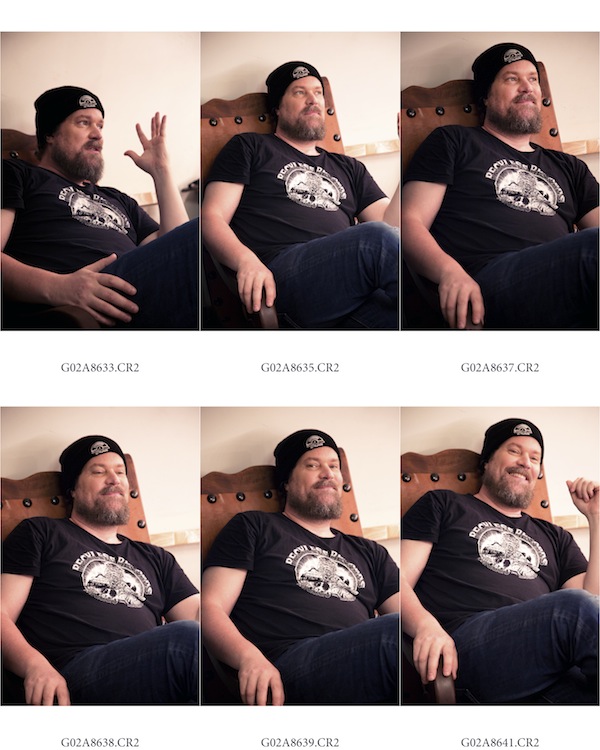
John Grant 4 webDelicately stroking his beard, Grant reflects on his childhood. “I knew I was gay from a very early age. I wrote the song ‘Sigourney Weaver’ about being in middle school with the hyper-rich and coming from a small town in Michigan. There was all this disgust and hatred thrown at me from the perspective of class, which got mixed in with the hatred that was being directed towards me for being gay. Others had already figured out that I was gay even though I wasn’t able to have any sort of dialogue with myself,” he recalls. “I hadn’t expressed anything to anybody. There just seemed to be rejection no matter where I went: ‘What the fuck are you looking at, faggot?’ ‘I’m going to kill you, fucking faggot!’ ‘What are you fucking doing here you fucking faggot?’”

Grant’s chilling words cut close to the bone. His tone is fiery as though those hate-filled words were just uttered. At home he was constantly reminded that he must fit into the picture that his parents had of him, that it was not okay for him to be authentic. Try to imagine it for a second. You’re bound by the intolerant judgment of your peers and your family. Unfortunately, many of us can.

The only sexual advice his pious parents ever gave him was that masturbation was wrong, but it didn’t prevent John from experimenting. When he was six, he played around with a kid next door. One time the neighbor’s sister caught them. Later, the boy’s cousin approached John and fired, “I know what you guys are doing and I’ll ruin your life if you keep on.” It scared the hell out of Grant. (At fifteen, he had his first sexual experience with a boy he met at church.)

Being positive was one of the greatest things that happened to me. It caused me to get more serious about being in recovery, too

.During his formative years, John just swallowed his true feelings and morphed into what others wanted him to be. He was riddled with stress and it climaxed during his senior year in high school.

But there was a silver lining, someone who believed in…him. His drama teacher confided, “You’re one of the people that I would encourage to act as a living, if you feel you want to do that.” Of course, his parents wouldn’t have any part of it, grousing, “No son of ours is going to get into a disgusting field like acting.” But John was a good actor.

He was good at auditioning as well. When the time came to audition before his fellow thespians, whom he’d known for several years, it should have been just routine. But this time it was disturbingly different. He tried out for the Cheshire Cat in Alice In Wonderland, which was going to be performed around elementary schools. “In that moment on stage, everything just came together…and changed. I couldn’t audition in front of these people who I knew for years, who loved me exactly the way I was,” he laments ruefully, removing his hat. “It was a horrrrifying experience!” He soothingly tugs on his beard and looks down. “I feel like I’ve spent every moment since then trying to get back to that unaffected child or young person. I’ve made progress, but it’s an ongoing battle.”
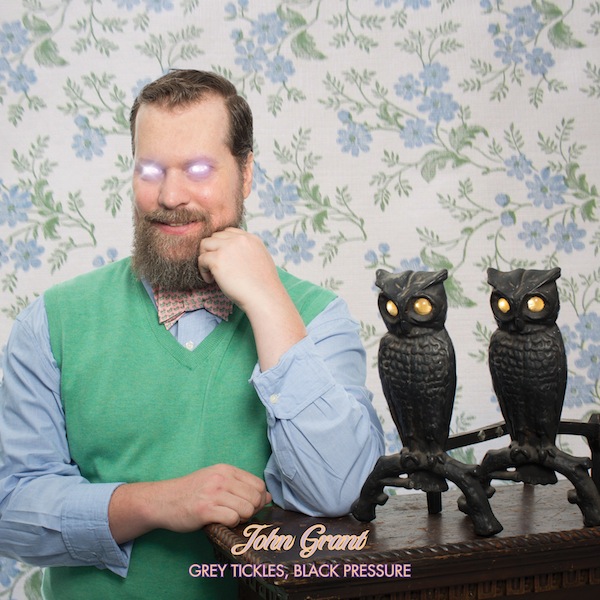
John_Grant_Album_ArtworkWhen he was twenty, John lived in Germany where he attended a conversion conference. Brainwashed in his youth, his parents voices echoed: “We still love you but this isn’t something that you choose. You’ve got to be healed.” His engineer father had once revealed to him that they knew he was different from the age of two. John’s invalidating mother once stung him when she confessed, “I’m disappointed in you.” At the conference, John met some “wonderful people,” and ended up sleeping with his roommate. He lets out a guffaw and adds deliciously, “And he was cute.”

Grant returned home to Colorado and in 1994 started a band, The Czars. Despite favorable reviews, they didn’t build an audience. The band broke up ten years later due to John’s unbearable behavior. He hit rock bottom.

It was a nurse that mended John’s life. He met her at Denver General Hospital where he was getting tested for STIs. She urged him to seek rehabilitation through AA. In 2004, John kicked alcohol and drugs. Freshly sober, he made a commitment to start over. He laid down roots in New York, where he lived for three years. While there, John worked as a flight attendant for a small airline (“The worst job I ever had!”), a clerk in a record store, a waiter, and a professional translator. He trained to be a Russian Medical Interpreter at New York University School for Continuing and Professional Studies, and then was hired by a hospital to translate between doctor and patient. (“That was an amazing, amazing job,” he emphasizes solidly.) On the downside, he also began replacing his former addictive substances with sex—a lot of sex.

Several years later, John received a text from a former one-night stand admitting to him that he had just been diagnosed HIV-positive. “I was in shock,” declares John, who was on a press junket in Stockholm. “This guy was actually a journalist who came to interview me while I was in London. There was this crazy sexual thing going on between us during the interview.” Due to a tech rehearsal, the interview was interrupted, and on a later date, they reunited in Den Haag, Netherlands, and completed the interview.

“I put myself in this situation,” concedes Grant. “I had the choice to put on a condom. I knew what I was doing.” He cracks a faint smile. “I was not taking drugs and alcohol but I was still engaging in destructive behavior. Changing my attitude toward sex seemed like such an insurmountable task that I just decided, ‘Well I’ll just give into it and do whatever the fuck I want,’” he says. “You can’t pick and choose which destructive behaviors you’re going to keep, you have to go all the way.”

Grant credits being diagnosed as a “gift,” as it empowered him to take responsibility for his life. “For once in my life, I took control,” the poet-singer recounts with pride. “Being positive was one of the greatest things that happened to me. It caused me to get more serious about being in recovery, too.”

To ease the anxiety over his diagnosis, John wrote a song, which is how he copes with pressing issues. “Ernest Borgnine” was created.

Got off of the hooch and the crack and skipped the smack down—
But then you had to find yourself a lower low.
Doc ain’t lookin’ at me; says I got the disease.
Now what did you expect? You spent your life on your knees.
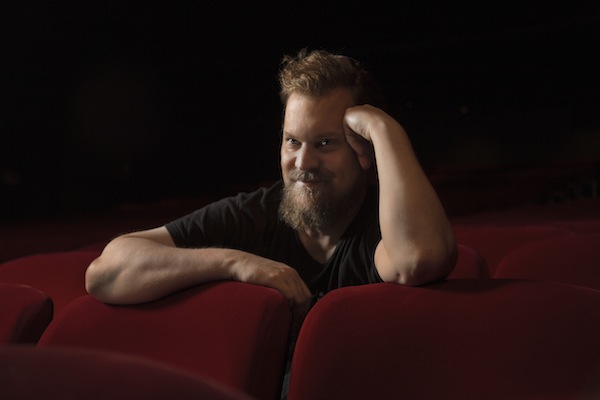
John Grant 3 webThe repeated phrase in the chorus explains where the idea came from: I wonder what Ernie Borgnine would do. “He was a favorite actor of mine and I’d ask, ‘What would this film hero do in a situation like mine?’” John was mesmerized by Borgnine’s performances. “I always saw him in these disaster flicks, really liked his face, and thought he was a great actor,” he opines. “He’s just sort of one of the fixtures of the seventies for me, and that era is one of the greatest things that ever happened, besides the eighties, which I think were even better!” the songwriter exclaims with overwhelming enthusiasm. “I really am stuck in the seventies and the eighties.” (When asked to describe his music Grant answers, “It’s a mixture of the seventies and the eighties.”)

The artist ponders pensively. There’s stillness. “I used food, I used money, I used sex—all for escape,” announces John. “For decades I’ve used everything for the wrong reasons.” He takes a deep breath and let’s out a hearty sigh. “Ya know, it’s a horrifying place to be self-aware and none of those toys to play with anymore that helped you forget.”

Though John relentlessly confesses in self-disparaging words, with insightful humor, his next move in life was bold and gutsy. With his trademark frankness, in 2012 at a live performance at the Meltdown Festival in London, he came out publicly about his status.

I felt shame for being HIV-positive, but I thought, why not?! I knew it was time for me to own this.

He wasn’t sure he’d do it and even when John walked out on stage, he wasn’t definite. He hadn’t even told his family. “I felt shame for being HIV-positive, but I thought, why not?! I knew it was time for me to own this. I realized that I was not the only one who was going through this. So I guess I came clean to help others. It was really about doing it for them.” After confessing, John sang “Ernest Borgnine” to a stunned crowd.

Someone lightly raps on the door. John answers, “Come in.” A fellow enters saying, “Excuse me.” John pronounces, “This is my incredible keyboardist.” Chris extends his hand and we shake. He grabs something from the table and walks out. There’s an obvious affection between the two.

Living with HIV for John has been a challenge. “There’s been weirdness going on since I’ve started taking the drugs,” he specifies, currently taking Truvada and raltegravir and the virus is undetectable. “Sometimes when I wake up in the morning, it takes me time to focus. It’s like everything is a moving mosaic made up of tiny little tiles moving very slowly. I have nightmares and vivid dreams too. You know, you hear all about these kinds of things [when you’re infected].”

Grant maintains sobriety by the using the foundation he’s laid down for himself and by using the support of the 12-step program. “It…is…tough,” admits John, gradually and gently. “Anything that smacks of my upbringing, especially God-talk, is very difficult for me to stomach. It’s so deeply ingrained in me,” he says. “It’s very hard to conceive of believing in anything, even though I feel like I do. But on the surface, I wonder to what extent I’m capable of actually believing in something on my own, which isn’t connected to programming that I received.” For an instant, John sits back, presses his forefinger to his mouth, as if he’s shushing someone, looks upward, then returns to his usual position of leaning forward. “I do experience incredible things in these programs, and I’ve met incredible people who are there for you consistently and are not judgmental. I’ve learned anytime that I see shit that I don’t like, I move on.”

Therapy helps as well. He’s had plenty of it on an irregular basis. Before his national tour, he had a session with a new therapist in Iceland. “It seems promising,” he boasts. In their first session, the therapist asked, ‘Why do you think you’re here? Your sponsor called me and as a favor to him I’m seeing you, even though I’m not accepting new patients right now.’ “I told him my story and he said, ‘Ahh, let’s get you signed up for another appointment, shall we?’” John is amused. We laugh.

Iceland is therapeutic for John too. “I feel safe here,” he remarks. John first visited Iceland in 2011 toJohn Grant 5 web attend the Iceland Airwaves Festival. Soon after, he moved there, captivated by the country’s beauty. Though he’s fluent in German, Russian, and Spanish, he hasn’t quite tackled Icelandic completely. “I’m making great progress in Icelandic,” he insists, “but I’m not fluent. It’s a very hard language. There are one hundred and twenty forms for every adjective and sixteen forms for every noun—and that’s the good news!” He chuckles.
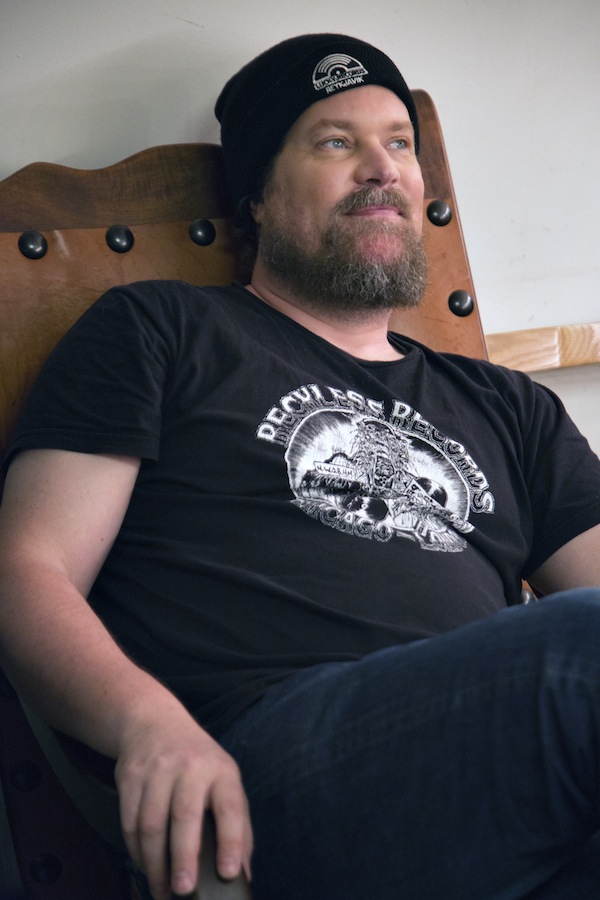
Of many things Grant likes about Iceland, one is his Icelandic boyfriend, a graphic designer. He doesn’t want to mention his name, as he honors his beau’s wishes to remain private. They’ve been dating for nearly three years. When time permits, his partner will cozy up with him while John’s on tour. They recently returned from a trip to Japan. “He’s quite something…,” he coos.

Mystery is not a high priority for upfront, straightforward John. On their second date, John revealed his HIV status. “I didn’t want anything to develop between us, and then lose it.” Afterwards, his beau went home, researched it, and returned, saying, “Hmmm…I can deal with that!”
Their relationship is developing, Grant says. He’s content with their connection, which is a barometer of the progress he’s made in intimacy. “Being close to someone was never a possibility for me before,” John divulges. “It isn’t possible if you don’t have access to yourself. You just don’t have anything to bring to the table.”

This is a new position for the crooner and it’s tricky. Sex was always an escape, a validation, and he was usually high. “Having sex in the moment, with somebody I deeply care for, brings up a lot of fear of intimacy for me.” He arches an eyebrow and deduces, “This is not a fantasy.”

“Sometimes I wonder why sex is such a complicated issue with this person who you feel so deeply for and yet, you know that you’re willing to fuck at least fifty of the guys you saw earlier today, no questions asked,” he smirks. “That’s a problem for me. It doesn’t make sense. I’m uncomfortable talking about it and feel embarrassed or ashamed. But I talk about it because I know I shouldn’t be ashamed.”

I mention the “Madonna/Whore Complex,” a psychoanalytic term for those who have the inability to express their full desire with a loved one, tending to place them on a pedestal, thus finding it easier to have anonymous sex, where there’s no preconceived intimacy.
The door creaks open. Matt pokes his head in, “Be ready for you in five minutes for the sound check.” John replies playfully, “Yeh, I’ll believe that!”

Music keeps John healthy. Music is his life; life is his music. He listens to a litany of singers: Gary Numan, New Order, Nina Hagen, Lene Lovich, Alien Sex Fiends, Skinny Puppy, Vicious Pink, Blamage, Visage, Culture Club. There’s urgency when he names these musicians. It’s his passion. Without warning, John eagerly asks, “Oh, have you heard of Susanne Sundfør, from Norway?!” I haven’t. “You have to hear her, Dann! Her voice is pure, angelic…”

John swiftly drops to the floor, knees scooting under the coffee table and hurriedly clicks on his laptop that lies on the table. He needs to get to the stage. John is like a kid who’s found buried treasure. Trying to call up a YouTube video, he finds the reception is poor. Disappointed, he searches for his phone and tries to pull up the singer’s video. “I really want you to hear her,” he proclaims. The cell works! The video plays while he holds the phone in the palm of his hand. We watch together. At one point he says, “Look, I’m all chills.” Indeed. I look, and his arms are splotched with goosebumps.
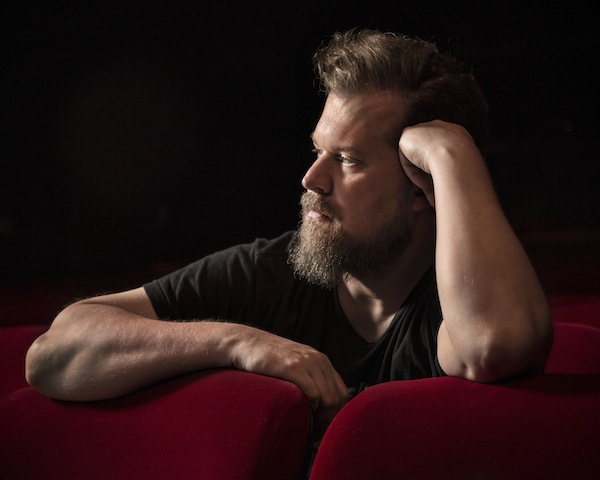
John Grant 2 webJohn’s reaction to Sundfør is really him looking into a mirror. He’s the one who sings with purity, beauty, and fervor. After the interview, I sneak into the theater and listen to Grant sing for a sound check. Aside from the technicians, I was the only one in the 1,600-seat venue. His live performance can’t compare to viewing him on YouTube. The Internet screen does not do him justice! He’s the Tennessee Williams of music. John’s killer voice, laser-sharp sensibility, and luscious bewitching phrasing, transfix me. This time, I had chills.

The Susanne Sundfør video is nearly over, so John lowers the volume. He looks at me with those striking, dancing blue eyes and reflects. “There was a moment when I could have said that I could go back to that [addiction] and finish the job [suicide]. But I said to myself, ‘Wouldn’t you like to actually find out what’s at the bottom of all this shame and self-loathing and what’s been keeping you back from actually realizing yourself all these years?

“I realize I connect with people,” clarifies John, with a pleasant satisfaction. “I like doing what I do and I feel comfortable on stage. I didn’t feel comfortable in my skin in any way shape or form for years. I still struggle with that, but it’s getting better.” John briefly glances to his side at the dominating theatrical makeup mirror, with its illuminating lit high wattage bulbs, which expands the width of the room.

“Of course I still have a lot of shit to deal with. Happiness is not this Holy Grail where you get there someday. It’s right now. And that doesn’t necessarily mean the absence of pain. They aren’t mutually exclusive.” He grins, glancing down at his blue leather trainer shoes. “It’s acceptance. Acceptance,” John repeats eloquently, with a knowing nod. “My latest album Grey Tickles, Black Pressure is all about acceptance.”

A faint crescendo of a rockin’ beat of African drums can be heard. It’s his phone. John switches it off. He knows it’s Matt calling. He abruptly says, “I gotta go.” With a bear hug (he gives good hug!), he’s out the door. “I hope we run into each other again. Thank you,” offers John genuinely, concluding, “Don’t forget to check out Susanne Sundfør…” as his husky resonating voice echoes down the hall, slowly fading out.


For more about John Grant and tour dates, log on to: www.johngrantmusic.com.


Photographer’s Assistant: Fridgeir Helgason; Grooming by Garret Gervais at GRID Agency (www.gridagency.com); Digital Styling by Eve Harlowe (www.eveharlowe.com).


A special appreciation extended to Matthew Hetsnecker for his support.


Dann Dulin interviewed Joel Goldman for the June cover story.

Words by Grant

What do you do in your spare time?
I like to buy a shitload of books. I put them around, my home, sit myself down, and stare at the ceiling (he chuckles.) I love being surrounded by all these incredible books. After a tour I love going home, picking a book out and spending time with it. I have a gigantic shelf of reference books in all different languages. It’s a great way to bust your own balls, with keeping your languages fresh, by buying a Russian/Spanish dictionary or a German/Icelandic dictionary.

One of the press shots for your new album, Grey Tickles, Black Pressure, depicts you holding a croquet mallet, all splattered in dripping blood. How did that idea come about?
It’s just me fantasizing about the times that I did want to take a croquet mallet and bash the head of someone who was directing this hatred towards me. It’s also because I love horror flicks.

If you could invite any famous person to dinner, who would that be?
Madeline Kahn

Name a few of your favorite films.
Wings of Desire. Adaptation blows my mind. Tootsie is one of my all time favorites!

Briefs, boxers, sockjock, thong—or nothing at all?
Boxer briefs.

Complete this sentence: I know it’s going to be a good day when . . .
I manage to get out of bed.

What celebrity would you like to have wild animal sex with?
Colin Farrell

Lady Gaga, Madonna, or Gloria Gaynor?
Grace Jones.

Name one word to describe John Grant.
Quality.
 0  1116

Learning from the Past
Multimedia artist Stephen Mead talks about his new CD, Threnody for a Forgotten Plague
by Alina Oswald


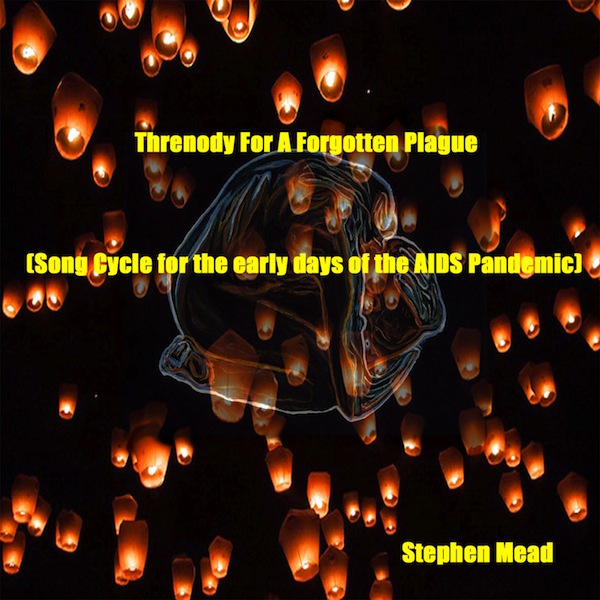
Threndody for a Forgotten Plague 3a as cover

Some paint with light. Others use words. Stephen Mead does both. A multimedia artist and author known for his color collages and poems, Mead recently added music and sound to give new life to his work. The result is his new CD, Threnody for a Forgotten Plague, a collection of sung poems of lament dealing with the pain, suffering and loss brought by the early days of the AIDS pandemic.

Being familiar with Mead’s visual artwork and books, I could only wonder about his decision of working with music. So I gave him a call to find out.

“It had a long time in hibernation, before I actually worked out the guts to give it a shot,” Mead says, explaining that the idea for Threnody started several years ago, when he was asked to record a few of his poems for a radio station. To make it more interesting, Mead tried to record his poems using music as background. But, as he opened his manuscripts to select the poems, he remembered how he’d first heard the verses, being sung, in his mind.

It took Mead several more years to turn the idea of recording his poems as songs into reality. At first, he would approach musicians and vocalists to sing his poems. When nobody showed interest, Mead decided to do it himself. So, he began the long process of finding free sounds and music, and pairing them with his poems.

“That took a lot of listening,” Mead says. “It’s like when I worked in a collage medium, [and] placed the colors next to each other to see if they worked together. I would just do it with sounds. I love music, and painted a lot [while listening to] music.”

Mead considers Threnody a work-in-progress. The CD is an emotional exploration, a compilation of poems written before the advent of HAART regimens, some verses inspired by his work in the hospital, as a caregiver for HIV patients.

“Love ballads are some of my favorite pieces,” Mead comments, talking about Threnody songs. “‘Buddy [for Leonard Matlovich]’ is one of my favorites, dealing with a war veteran. I think I was listening or reading an article about this veteran. He had lost a lover…this was before Don’t Ask Don’t Tell, when people could still be discharged [outright].” Another track, “He Fills the Window,” is a love song that takes the listener to the early days of the epidemic, and to the pain associated, then, with an HIV-positive diagnosis.

Track 13, “Building Immunities,” was recently awarded top prize in the poetry category for this magazine’s annual Christopher Hewitt Award and was featured in the August 2014 issue. Here is an excerpt:

Forgetting regret,
in depths of slumber I dreamed,
river-willed, stirring stillness:
you again, you—

But time has changed the face of AIDS. Today, we may find ourselves caught between a painful past, defined by the plague of the early eighties, a present marked by undetectable status and functional cures, and an optimistic future of a generation free of AIDS. So maybe it’s only normal to question the importance of keeping that past alive.

Stephen Mead believes that it is important to remember the history of AIDS, as it is important to remember any aspect of history, including the long and ongoing fight for equal rights. “When I first came to terms with being a gay person,” he says, “I’d done a lot of reading. I think it’s important to know what others went through in order for me to have the privileges I have now, [when] gay marriages are becoming more prevalent.” Same goes for the AIDS pandemic. It is important to remember, so that it’s not repeated. “Even though we have these new ways of treating AIDS, of living with AIDS [today],” he adds, “and we should be thankful for it, [AIDS] is still a serious condition. It hasn’t gone away.”


To learn more about Stephen Mead and Threnody for a Forgotten Plague, please visit http://stephenmeadmusic.weebly.com.


Alina Oswald is Arts Editor of A&U. She interviewed artist Bill Bytsura for the January 2015 issue.

 0  809

Musical Influence
Singing since age six, Euro sensation NINA is all grown up, bringing fans to their feet and talking about HIV
by Sean Black
NINA - My Mistake - Promo 4 web

Photos courtesy Aztec Records

Opening for a beloved musical act with a long-established fan base runs its share of risk. In the case of NINA, who opened seven dates for Erasure during their 2014 U.S. The Violet Flame Tour, there was absolutely nothing to fret about. Audiences agreed with pioneering duo Andy Bell and Vince Clarke that NINA was a damn good fit.

The last two years have been big ones for the German born synth-pop singer-songwriter, stemming from her 2013 hit “We Are The Wild Ones” and follow-up single “My Mistake.” Music critics seeking to introduce her to a global audience have described her sound as “Lana del Rey meets Robyn,” and indeed her sound evokes the lonelier side of emotions, driven by a propulsive electronica beat. “My music is synth-driven, retro and dreamy and the lyrics are usually dark and melancholic. I tend to co-write a lot too. I absolutely love the eighties, so you can hear some of that in there too. It reminds me of my childhood and I feel very close to it,” says NINA, whose live band includes backup drummer and label manager Laura Fares, who has had a long career as a session drummer.

Fans can expect new music soon, too. Back in her homebase of London after touring, NINA was eager to return to this phase of her bright career. “I’ll be finishing some new songs and the album will hopefully come out later this year, with another single release beforehand,” she notes, adding that she hopes to find more time to lend her talents to HIV/AIDS advocacy events.

NINA took a break to talk to A&U about her upbringing, her musical DNA, past and present, and adding her voice to AIDS awareness.

Sean Black: So, what was it like opening for Erasure?
NINA:
It’s an honor opening for such a legendary band. I couldn’t believe it when I found out. It still feels like a dream. I used to play their records over and over again when I was younger. Beautiful memories spring to my mind when I listen to their hits.

Your sound is a perfect fit for Erasure fans, new and old; do you agree?
Yes, it seems that way. The audience has been such a wide mixture of people each night. I wasn’t sure how Erasure’s fans would react to my NINA - My Mistake - Artwork web

show, but they’ve been incredibly supportive so I guess it was a good fit.

Any other dream bands that you’d like to open for?
Depeche Mode.

How did music influence your childhood?
I grew up in Berlin and I have wonderful memories of my childhood. Music was always a big part of it, as my parents listened to a lot of disco and New Wave in the eighties. My dad had a shop where he would sell the newest cameras and TVs, so my mum used his cameras to record herself singing and I guess I picked up on that. They took me on long car journeys around Europe, that’s why I knew very early on that I needed to see the world and experience other cultures and expand my musical knowledge, too.

Who did you listen to growing up?
Depeche Mode, Queen, Duran Duran, Michael Jackson, and Erasure, of course! Also, earlier stuff like The Doors and Jimi Hendrix.

NINA - My Mistake - Promo 1 webWho do you listen to now?
I love HAIM and Thomas Azier. They’re awesome.

What is your reaction to the words “HIV/AIDS”?
I have a couple of friends who are HIV-positive and they live normal lives. I guess HIV/AIDS doesn’t sound as scary as it used to sound when I was growing up. Medicine has advanced enormously since then, but it’s still crucial to talk about it and create awareness.

Do you get tested for HIV?
Yes.

How is your generation dealing with HIV? Do you find yourselves discussing it openly?
Yes, I don’t think it’s as taboo anymore. Most people are conscious about getting checked regularly and about different ways of prevention. Luckily in this day and age, we can openly talk about it. I have done so with my partners, as it’s also a matter of trust.

For more information and to listen to NINA, log on to: www.ninamusic.co.uk and soundcloud.com/ninasounduk. NINA’s EPs are available on iTunes and other music retailers.

Sean Black is a Senior Editor of A&U.

 0  298

Ruby’s Rap
by Ruby Comer

Adam Tendler

Photo by Greg Parkinson

Earlier this year, the pianist Adam Tendler preformed here in Los Angeles. Before the concert, I learned that he was a finalist for the 2012 American Pianist Association Classical Fellowship Award and the 2013 American Prize. Adam is an AIDS and LGBT activist, and when he performs his piece, “Night Thoughts” (“a meditative recital program of modern American piano music”), he donates his profits to one or more local organizations. “Night Thoughts,” a concert he performed at Rothko Chapel in Texas, can be viewed on Adam’s website.

The virtuoso was raised in Montpelier, Vermont, not far from The Trapp Family Lodge (of The Sound of Music fame), one of my favorite havens. The “maverick pianist” (The New Yorker) founded a nightly jazz series in New York and serves on the faculty of Third Street Music School Settlement. On the personal front, he has a beau of nearly five years.

Adam and I met up at UCLA one afternoon near the performing arts center, and sat on the grass amid the lively outdoor sculptures.

Ruby Comer: I want to be completely clear…please explain exactly what you do professionally.

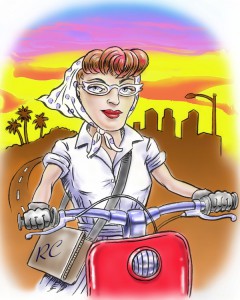
Illustration by Davidd Batalon

Adam Tendler: I perform modern music, which ranges from pieces composed this morning to a hundred years ago. I usually perform and study other people’s music, but sometimes I compose my own works. For instance, I recently premiered a protest piece in memory of Matthew Shepard called “HATE SPEECH,” for piano and audience cell phones. I also have a teaching studio and so the piano becomes a platform for education. And then of course I write about music and my life in the field, which inevitably involves the piano.

You’re cuttin’ a new rug, piano man! You entertain and educate through the piano. Whom did you listen to growing up in Vermont?
I grew up on Madonna, Prince, Beethoven, Chopin, and everyone in between. I have two older sisters who exposed me to everything from pop to metal to gangsta rap, and at the same time I took piano lessons and was raised with classical music around me all the time. Everyone in my family played the piano, and my grandfather was a piano teacher. But I suppose my heroes changed over time. As I grew to appreciate classical music as a vessel for my own self-expression, I started to find heroes in composers and performers who seemed to speak a language that resonated with me, and even this has been a kaleidoscope of different people over the years.

Adam, you are a one-man band. The AIDS epidemic…[he cuts me off and asserts]
…is the holocaust our community suffered in the eighties and nineties—and the indifference of those in positions of power who could have helped save lives. This gets me angry.

Indeed.
But then, Ruby, I also think of how that widespread ignorance and fear actually galvanized our community, and how we found unity and courage and power through the crisis. There’s still so much to do: A cure. A vaccine. An end to stigma.

88 web

When did you first learn about the epidemic?
I’m not sure about specifics, but, growing up in Vermont, my first knowledge of AIDS probably came via the entertainment industry and its response, from MTV promos to magazine articles to celebrities wearing red ribbons. [He pulls out some sheet music from his backpack to shield his eyes from the bright sun.] I also remember watching and re-watching the movie version of And The Band Played On when it first came out in 1993. I was eleven and HBO played it all the time back then. But I definitely already knew about AIDS before watching that film. Probably Madonna told me about it.

[I chuckle.] How has the AIDS epidemic affected you?
I lost a friend and a musical colleague a couple of years ago. Overwhelmingly, though, my positive friends live tremendously healthy and empowered lives, and they affect my life every day in the best possible way.

In what way?
Well, my first major relationship was with someone who was positive. We were together for two years. I virtually went from the closet straight into this relationship. He was ten years older and twenty years positive, so I guess you could say it was kind of zero-to-sixty! It was a true adventure, though. We had a blast.

Did you encounter any challenges?
I think both of us wondered, at our own times and for our own reasons, if we were really right for the other person—and our different statuses probably played a part in that. Looking back, we were just projecting our insecurities onto each other. All things considered, I think we navigated the dynamic remarkably well, especially considering we were both a little nuts. We’re still friends. And we’re still nuts.

I read your recently published memoir, 88×50 (Kirkus Indie Book of the Month). I thoroughly enjoyed joining you vicariously on your adventures driving in a Hyundai around the United States to perform free recitals on the eighty-eights to underprivileged communities. Where can others read your tome?
It’s available on all digital formats—Kindle, Nook, and iBooks—as well as in an audiobook format on iTunes and Amazon. It can also be streamed on Spotify.

I know you often perform at New York’s GMHC, too. What sparks you to volunteer your time and talent?

Photo by Scion Fullana

I saw Larry Kramer’s The Normal Heart on Broadway, twice, and it inspired me to do something for GMHC. [Larry co-founded GMHC in 1982.] You know, Ruby [he clears his throat], I think of volunteering as a privilege and a responsibility. We have to look out for each other, and it’s so easy to lose motivation when we’re at our computers trying to outwit each other on social media.

Oh, drats. Don’t get me started on that horrid FaceBook, Twitter, and the rest of the muck, Adam. Call me an old fogey, but I think we’ve lost the intimacy. [He smiles, smirks, and squints.] Whom do you consider a hero in the AIDS epidemic?
Larry Kramer. Fearless, selfless, and incredibly talented as an artist, we owe so much to the fires he lit, from founding Gay Men’s Health Crisis and ACT UP, to his brilliant body of work. I’m so happy to see more people recognizing his role in history and coming to his work, with the recent revival of The Normal Heart in New York and the HBO movie version of the play, as well as his prophetic and scathing book, Faggots, which I think more people are reading these days.

I must tell you, when I met my boyfriend on the Christopher Street pier in New York, that’s the book he was reading. I was like, “Hey, I just bought that, too. Want my number?” [His eyes beam and Adam shrugs with a grin.]

Ruby Comer is an independent journalist from the Midwest who is happy to call Hollywood her home away from home. Reach her by e-mail at MsRubyComer@aol.com.

 0  633

Ruby’s Rap by Ruby Comer

Sophie B. Hawkins

Photo by Gigi Gaston

Sophie B. Hawkins’s music is like her lover—it exposes, inspires, and even threatens. Yummy. After reading this revelation in an interview of this singer, songwriter, and musician, I knew I’d bond with this gal.

Over the past two decades, Sophie’s had many chart busters. In the early nineties she blew it out with, “Damn I Wish I Was Your Lover,” from her debut album, Tongues and Tails. It garnered her a Grammy nom as Best New Artist. Her next hit, “As I Lay Me Down,” sung in her seductive wispy voice calls to mind my blissful courting days with my fiancé, Rudy, in the Cotswolds of England. In 2012 she released The Crossing, her fifth album. She’s written nearly twenty movie soundtracks, even appeared in several of them, and last year sang on the NBC sitcom, Community. Her producer, manager, collaborator, and partner, Gigi Gaston (together for nearly twenty years; Sophie considers herself “omnisexual”) made a documentary in 1998 about Sophie called The Cream Will Rise. The film accompanied her on tour, providing insights into her troubled upbringing.

Raised in Manhattan, Sophie overcame childhood abuse, anorexia, and drug addiction. Today, she lends her time to charities that promote environmental issues and raises public awareness about cruelty to children, animal rights, and HIV/AIDS. This outspoken political activist is a vegan and a mother to her five-year-old son, Dashiell. They recently moved from L.A.’s Venice area back to her hometown, New York City.

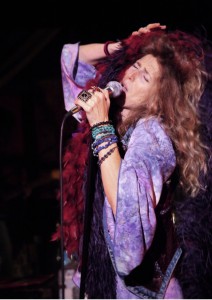
Last year in Los Angeles, she preemed in a new musical, written by Gigi, Room 105: The Highs and Lows of Janis Joplin. Sophie wholeheartedly embodied the late legend’s husky visceral pipes and her strung-out hippie persona. Her portrayal was haunting. Today they are hoping to find other venues to stage the show.

We rhapsodize from her penthouse overlooking the enchanting lights of magical New York.

Ruby Comer: What was it like to get into Janis Joplin’s skin?
Sophie B. Hawkins:
There are no words. I can only express what it’s like by using every musical fiber of my being, which I did whenever I walked on stage as Janis. I did find out that we had similar backgrounds.
We had the same kind of families even though she was raised in Port Arthur, Texas and I was raised in New York. I ran away at fourteen and she did also at a young age. We had some of the same demons too, like addiction. In high school she was called ‘Ugly Man;’ I was called ‘Freak.’ [She tilts her head to one side, her gorgeous long locks cascading.]…and of course I fell in love with her.

Hawkins channels Joplin in the musical, Room 105. Photo by Ed Krieger

Your middle name is Ballantine. What’s the ethnicity?
It’s Scottish and it’s a family name.

When did you first hear about the epidemic?
I was in fifth grade when I first heard about AIDS. It was called hepatitis, but we knew it wasn’t hepatitis. Our homeroom teacher died of AIDS, and we heard stories that they were giving gay men shots for hepatitis by the piers in the West Village. Later there was a conspiracy theory that the shots made the men sick.

How has it affected you?
AIDS has always affected me, from dear friends dying to its global impact. AIDS was love’s shadow for many years, and though it feels more under control now, it’s a legacy that our generation has tattooed on their hearts. AIDS changed humanity in many ways. So many brilliant creators died before their time. The shame that first surrounded AIDS impeded the positive perception of gay love.

Even though Dashiell is a bit young to be briefed about STDs, what do you think you’ll say when the time comes?
I don’t have the faintest idea what I’ll say to Dash! I suppose I’ll tell it like it is. That’s how I handle everything with Dash.

Photo by Alan Mercer

Good deal. I know you are an accomplished painter, but when do you have time to brushstroke?
I don’t paint as much as I would like. I do it when I’m on a “break.” Hopefully, another painting burst is coming soon. Someday I’ll only paint…perhaps.

What’s on Ms. Hawkins’ agenda for 2014?
Well, I’m writing another musical, a book that really excites me. It’s a young person’s story but it’s also a grown-up story with themes that aren’t yet in popular children’s literature. I also have another cycle of songs ready to record, but need to scope out a direction for that body of work.

What types of music do you listen to?
I listen to absolutely all types of music—and now I know every theme song for every kids show! I still love Anita O’Day, Bach, Omar Faruk Tekbilec, Duruflé. I can’t possibly list [all] my music passions!!!

Who’s your favorite singer of all time?!
My favorite singer—honestly—is Dashiell. [She smiles.]

You’ve met many famous people. In a single word describe Gloria Steinem, Bruce Weber, and Chelsea Clinton.
Gloria Steinem: sexy; Bruce Weber: sensitive; Chelsea Clinton: brilliant.

Who’s your hero in the AIDS pandemic?
I don’t know. [She pauses then in zen-like calm replies] Scientists and doctors and maybe it’s a villager in Africa who delivers medicine. Maybe it’s a villager passing out condoms….

Ruby Comer is an independent journalist from the Midwest who is happy to call Hollywood her home away from home. Reach her by e-mail at MsRubyComer@aol.com.

Ruby’s Rap by Ruby Comer

Ari Gold

Photo by Duane Cramer

I like Ari Gold’s derrière! He must like it too. This r&b pop singer flashes his naked bod everywhere: on the streets of Manhattan, on CD covers, magazines, music videos, and even at events like Night of a Thousand Gowns, a benefit for New York’s GMHC.

After my Helios Facial and celestial double massage (Soul To Sole & Swedish) at the Agua Caliente Casino Resort’s Sunstone Spa here in Palm Springs, I stroll out to the private pool area and park my weary bones in a cushiony lounger. As my fuzzy eyes and wrung-out body settle back to earth, I look across the intimate pool, and with a hazy gleam, espy this god, nearly nude. Boy, he looks familiar, I ponder. Could it be…Ari Gold?

Before I loom toward him, flashes of Ari’s career race through my mind. Raised an Orthodox Jew in the Bronx, he has been singing publicly since he was discovered at the age of five crooning at his brother’s bar mitzvah. When Ari’s debut album was released in 2000, People magazine wrote, “[His music] takes the listener to fresh places.” He’s toured the world alongside Cyndi Lauper, Debbie Harry, and Chaka Khan, and is a recipient of the Independent Music Award. This songwriter even found time to attend Yale University for a while, though he graduated with honors from NYU. The vocalist’s charitable efforts include homelessness, human rights, and HIV/AIDS awareness and research. Ari can usually be found addressing youths around the nation about growing up gay and orthodox, and HIV prevention.

Now feeling more compelled, I gingerly put down Eric G. Meeks’ enlightening book, The Best Guide Ever to Palm Springs Celebrity Homes, and approach this hombre. I’m a lucky girl! It is Ari! He’s gracious, and indeed this hunk is hot—just like the desert. After the introductions, I seat myself at the end of his lounger and he scoots over to me. We shoot the breeze right next to the sun-sparkling pool.

Ruby Comer: Such a nice quirk to find you here! What’s the name of your new record?
Ari Gold:
Play My F**kn Remix—and my record label, GOLD18, just released a maxi-single for “Wave Of U 2013.”

Photo by Mike Ruiz

I like when you get nasty! [He chuckles.] I guess I just naturally gravitate toward bad boys. What comes to mind when you think of the epidemic?
My father would always say that his father, my grandfather, was not a Holocaust survivor, simply because he was not in the camps. But he lost his entire family. To me, that makes my grandfather a survivor. We are now all survivors whether or not we are living with AIDS in our bodies. The generation that did not see their friends die has no idea how their lives have been affected by AIDS. We were already a people who suffered from homophobia, and then to have AIDS decimate so many vital contributors to society. We are still suffering from the losses in ways that we have not begun to understand.

When did you first become aware of AIDS?
My awareness of AIDS came simultaneously with my awareness of homosexuality. All I knew was that it was something gays had. Some rabbis from my school made it seem like a punishment from God. I’m not sure that I would have had a different perception of it had it not been for artists like Madonna and George Michael.

And were you taught HIV prevention in high school?
We were barely taught any sex education. One only had sex within the confine of a heterosexual marriage. And if you had sex with your wife on the Sabbath, it was a mitzvah.

Can you tell me specifically how you’ve been active in the HIV/AIDS community?
I used to go to ACT UP meetings at the LGBT Center. I’ve done work with GMHC, amfAR, Equity Fights AIDS, and was knighted by the Imperial Court of New York, which in addition to fighting for human rights, has raised money for many AIDS charities. [He rises up and sips water from his bottle that rests beside him.] I’ve also performed at many AIDS fundraisers, and I’ve personally participated in studies for prevention and treatment. I throw condoms out at my concerts.

Sir Ari Gold poses for HIV Equal. Photo by Thomas Evans

Bravo! Why is it that you volunteer, Ari?
I see my art as a form of activism. My passion for creating and performing is completely tied into my passion for equality and life. And because we did not have equality for LGBT people, we lost millions of lives that should not have been lost. I stand in much greater freedom today because of what they sacrificed. I feel it’s my responsibility to take advantage of that so I can pave the way for those who come after me. In some ways, I already have. That is the biggest honor.

Any advice to some of your younger fans who may not have witnessed the scourge of AIDS in the eighties?
I really don’t have any ideas that organizations like projectdesign.com haven’t developed already. They need to know that it’s not as simple as just taking a pill. There are also new medicines that are coming out for prevention as well, and we need to educate ourselves about them.

Have you ever dated anyone who was HIV? If so, were there any challenges?
Yes, I have. There weren’t really that many challenges. We had safe sex and that was fine with me.

Have you always worn a condom?
There’s many things that I like to do sexually before using condoms. [He coyly grins and lifts one of his thick brown brows.] I use condoms for anal and oral sex. I have had oral sex without condoms though, and I have been a top and not worn a condom. I have also been in relationships in which we decided not to wear them after being tested. I am aware of the risks and have never taken them lightly.

A shot from Gold’s 2014 calendar. Photo by Francis Legge

How often do you get tested?
Once or twice a year—sometimes more, sometimes less. I’ve been seeing someone over the past year and we have both been tested. He’s a doctor.

Mazel tov, it’s nice to have a “dokk-ta” in the house….
Well, we don’t live together.

Ari, you are a role model. Whom do you look up to?
Oprah is my Jesus.

Can’t go wrong with “O!” How does your family feel about your success? You have two brothers, right?
Yes, Elon and Steven. My family has always been a source of support, inspiration, and even collaboration. It’s been a long road and we have worked hard to be as close as we are. My Grammy-winning brother, Steven, has contributed in some way to every project and album I ever released.

I adore that you’re an exhibitionist! Do you think your motivation might stem from rebelling against your Orthodox upbringing?
It seems I’m really into showing my naked ass lately, huh?! [He shoots a killer smile.] Rebelling against my orthodox background is definitely a part of it—especially when I’m wearing tefillin [black straps that wrap around the arms and head during morning prayers] while I perform “My Favorite Religion.” [Watch it on YouTube, darlings.] But my getting naked is also about celebrating my sexuality and allowing the male body to be objectified and penetrable—with consent.

Photo courtesy Sunstone Spa

We think alike, sweetie. Who’s your hero in the pandemic?
[His eyes squint from the sun and he instantly replies] Larry Kramer. [Ari glances off and briefly contemplates.] When I think celebrities, I think of Elizabeth Taylor. Other heroes for me are the ones who took care of their loved ones until they passed on. [We’re interrupted by a gust of warm wind that momentarily ripples through the palm fronds above us.] And if I may, I’d like to take this time to thank all the people who work so tirelessly in research, prevention, activism, education, treatment, and folks like yourself, Ruby, who give people a sense of community. I’m glad you approached me today.

It’s all my pleasure, Ari….


More of Ari exposed at www.arigold.com where you’ll find information about his seductive 2014 calendar—$1 of each sale is donated to GMHC.

Ruby Comer is an independent journalist from the Midwest who is happy to call Hollywood her home away from home. Reach her by e-mail at MsRubyComer@aol.com.

Playing to Strengths
Through Music and Advocacy, Singer & Actor Levi Kreis Helps Create a Love Revolution
by Chael Needle

Photo by Joshua Albanese

It is a bit of a puzzle why Rodin made his figurative sculpture, The Thinker, so muscular. Sitting there, hunched over with his hand half-covering his mouth, the Thinker is so deeply engrossed in contemplation that he might just as well have been posed reclining on a couch, nose in a book, and eating bag after bag of Funions. Maybe Rodin was trying to suggest with the overwrought physique what it is that we cannot see, that thinking takes strength—inner strength to know yourself and the world and the people in it as creative forces; inner strength to translate thought into positive action.

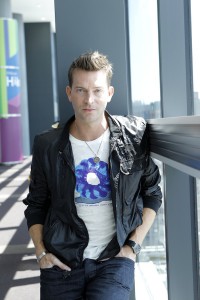
Singer, songwriter, and actor Levi Kreis, like Rodin, is similarly interested in inner strength, and the interplay of contemplation and action. It becomes obvious, when you listen to his lyrics or watch his soulful performances at the piano or on stage and screen, or hear him speak, that he has spent a lot of time working out a lot of weighty subjects—self-acceptance, advocating for others, spirituality, unity.

Yet, the workout is nowhere near done—he poses questions, pursues answers. “Sometimes I think I’m so rife with import that it’s a big eye-roll for most people!” the East Tennessee native blurts, laughing.

“Well, I grew up as a seeker,” he says, providing context for his philosophical streak. “I grew up in the fundamentalist Baptist church and I took everything they said to heart, until I realized that I didn’t want to live in such a physically, emotionally, and mentally crippling fear of being an abomination of God. So, I began to explore.”

He studied Paganism, Wicca, the I Ching, among other established belief systems, until he settled into a metaphysical groove, a kind of leitmotif woven through religion and spirituality.

“For the last four years, I have done a lot of studies with all the major world religions for the purpose of distilling them down to what we all have in common. It was part of a program to become a life and spiritual counselor, which I officially became in June.” He has no plans for a career change at the moment, though. The journey was enlightening, and second nature to him. “I don’t know—some people like reading novels; I like reading philosophy!”

There’s no denying, however, that his music is imbued with a similar depth of thought. He’s a kind of warrior-poet who brings together mind, body and spirit to do battle with life’s challenges, be they artistic or personal, and to find a higher ground. But this is not a lonely venture, and not as stoic as it sounds. Facing these challenges is a chance to connect threads within the tapestry of life—a vibrant way to engage with others, to nurture emotional bonds, to empathize, to help empower.

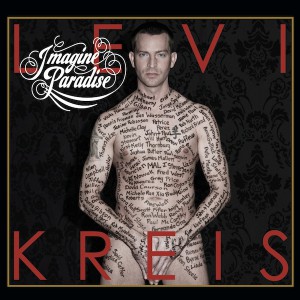
His latest album, Imagine Paradise (Vision 9 Records), is a case in point. When the idea to record a sixth album bubbled up, the now-Chicago-based artist was still in New York City, perfoming on Broadway as the ballsy, fiery Jerry Lee Lewis in Million Dollar Quartet, a role for which he won a Tony Award.

With acting, you receive a lot of support, explains Levi, who costarred in the films Frailty and Don’t Let Go, and toured nationally with RENT. As a stand-alone musician, he would have to wear all the hats—press, marketing, and so on. He wondered if he had the time or energy to do a sixth album.

“It was an exhausting idea to think about going back and, as an independent, one-man business, creating this,” Levi shares. “But a friend of mine said, ‘Instead of giving up and going your way as an actor, [think about the fact that] you’ve really built something over the last several years since your debut album in 2005; so why don’t you let the fans decide?’ So I did.”

The decision of the fans, who discovered Kreis’s masterful musicianship and his rich, stirring voice across albums such as The Gospel According to Levi and Where I Belong, rang loud and clear. They responded to Kreis’s Kickstarter campaign in such numbers that even Billboard noted the success. He not only ended up crowdsourcing funds, but also crowdsourcing the raw material for all twelve songs that appear on Imagine Paradise. One of his project’s Kickstarter incentives—different levels of funding are rewarded with different perks—was a custom-written, personalized song for backers who came in at a particularly generous price point.

W169.indd

Writing the album changed up his usual autobiographical approach. When Levi phoned the backers for a heart-to-heart about their life experiences, it was as if other people were putting their diaries in his hands. Asked if he felt an added responsibility trying to translate the experiences of others, Levi laughs at his own foible. “Given my history that I’m so entirely codependent?! Of course!

“It was more nerve-racking to me than I ever felt writing for myself. I felt a remarkable degree of responsibility being able to honor their story and also look at their story from the glass half-full [perspective]. That’s why Imagine Paradise is such a positive, life-affirming album.” Indeed, Levi’s stellar voice transcends like a ribbon in the sky on song after song, whether it’s the dig-deep disco-funk of “So Much Better” or the sunny bounce of the anthemic “Any Way You Wanna.” It’s music that melts away your fears and makes you want to try new dance moves.

“If we were sitting around talking and you were telling me about something that happened to you and we were friends, if we were tight like that, I would want you to expect from me the fact that I would not let you live in your [glass-half-empty] story,” explains the singer about themes that emerged from the collaborations. “I’d be like: ‘You know what? I’m going to remind you of your power. I’m going to remind you that you have so much great shit going for you. I’m going to focus on the positive and [let you] know that all of this is a reason for something, that it makes you stronger. Let’s move on.’”

It’s the way he would expect his friends to be with him. “I wouldn’t want to wallow in any sort of disappointments, or those moments, those dark nights of the soul that life sometimes give us. I’d rather absorb the wisdom from [the challenge] and take a step forward from it, and that’s kind of how I felt my responsibility was, as a human being, with these stories.”

The creative process of making Imagine Paradise solidified for Levi one of his long-held philosophical ideas: We’re all one; we’re all the same. “We can have different stories and experiences, and call them different things, but the core human emotion is always the same.” He mentions the inspiration for one of the album’s tracks, “4 Letter Word”: a friend who shared his story about serving in the military under Don’t Ask, Don’t Tell, and who struggled to nurture his relationship in an environment with no privacy, not even in e-mail correspondence. It was hard to say L-O-V-E, let alone keep it alive in a world filled with H-A-T-E. “My goal then as a songwriter was to find [the connection]: ‘Okay, what is the core human emotion here that I can access as a writer and contribute to this story?’” (The result would make the Bee Gees proud.)

The collaborations became a gift. “I can look out at the landscape of my friends and family now and realize: We all have different stories but at the end of the day we all want love, we all want forgiveness, and we all want to be heard, we all want to succeed, we all want to laugh. At the end of the day, we’re all the same.”

The other theme that buoys Imagine Paradise is the power of positivity. The verb in the album’s title is reminscent of Lennon’s thoughtful tune, a suggestion to listeners to take a proactive role. “I chose that title more from a metaphysical and philosophical standpoint as if to say, ‘Paradise is yours to the degree that you can imagine it.’

“Learning how to think positively is kind of like going to the gym. If you don’t go to the gym and you’re not doing curls and you’re not doing squats, then you’re not going to grow. If you don’t remain attentive and aware of how you’re actually utilizing your creative thoughts, you’re probably not going to be able to use them with the intention to create a life that’s a little more aligned with what your desires are.…
“It kind of echoes what I alluded to earlier about taking a positive approach to these stories. To say, ‘Oh, maybe nature is intelligent. Maybe this happened for an intelligent purpose that I am now willing to see, and utilize to become a more expansive human being.’”

This positivity is a counterpoint to the real forces in our lives that are trying to tear down our imagined paradises to put up a parking lot. Asked about the challenges that individuals living with HIV/AIDS often face in terms of stigma and discrimination, and, more generally, anyone who is starting to internalize negative perspectives from outside, Levi responds: “From a personal standpoint, I would inspire all of us in that position to do the work internally, to make a concerted effort to affirm and love who we are, and to realize that our biggest challenge sometimes is our biggest ministry to the world. The things that sometimes are laid upon us that appear to be crippling are the things that equip us to teach a world that doesn’t know.”

Teaching a world that doesn’t know can become frustrating. “I go back and forth from wanting to scream out loud to completely abandoning the idea of trying to make anyone think anything other than what they want to think,” says Levi about dialoguing with those who choose not to see any other perspective but their own.

“I do know that compassion and understanding is a process that everybody is engaged in, in one way or the other,” he offers, rather generously. “Where they are in that process is obviously vastly different from other people, who have actually been able to turn that [compassion and understanding] into a way of life, a way of thought, and a way of action. But I honestly think people who don’t understand need to educate themselves. I implore other people to sit down and educate themselves—because we’re only afraid of what we don’t know.”
But this kind of dialogue with those who put us in their moral crosshairs is not a step everyone needs to take until they are ready, says Levi. Those living with HIV/AIDS, for example, might need the strength of a “sacred circle,” as he calls it, a safe space filled with friends who will be there when you call.

Photo courtesy Vision 9 Records

Shares Levi: “I believe that to have a sacred circle that really nurtures and protects oneself is important for the duration of time that it takes someone to then maybe come out and be public about it, and be outspoken to their friends about it, and share their feelings about it, and educate other people about it.” It’s a little bit like taking the time to process before coming out. “But once they finally process and find a way to accept who they are, they will naturally begin to add their voice to their identity; they’ll begin to share, they’ll begin to reach out, and educate other people. And their boldness will educate other people.”

Faith communities may have a role in the fight against AIDS. “Regardless if it’s an all-inclusive or life-affirming religion or [thinking] back to the beginning with fundamentalist Baptist, I’m not a fan of organized religion, or religious administration. And I think I can completely embrace that now,” says Levi, who has given this much thought. “However, they are a reality in our society, and—you know what?—they serve a good purpose. There are a lot of people who find some incredible healing there, and I am one of them. I went to a religious institution—got me sober! And I’m now about four and a half years sober for crystal meth. So, they saved my life. I will not deny the fact that there is a role that they play.”

But faith communities, and particularly those in leadership roles, as Levi mentioned before, need to do the work of educating themselves about “what they can do to reach out and unify the spiritual community; to go out and actually be love. It’s fairly simple at the end of the day. God is love and love is action. It’s what we actually get up and do that is the most spiritual thing that we can do. That’s what I implore any religious organization to do, regardless of denomination. [The question is:] ‘What can you do?’ Because what we do to extend a hand to one another is the face of God.”

Levi Kreis put love into action recently with a fundraising campaign for Positively Living, a Knoxville-based social service agency that provides housing and care for those who are homeless and living with HIV/AIDS, mental illness, addiction, or a physical disability. For two months, he raised money through the sale of an EP of remixes of “Love Revolution (featuring Qboy),” a track off of Imagine Paradise. Although the campaign didn’t raise as much as he hoped, he was still impressed by the response.

“The truth of the matter is: any amount helps, especially with those non-profit organizations in small towns that are still facing a lot of that lingering prejudice. You know, I only ventured back to my hometown of Knoxville, Tennessee, back in March, as an adult,” he says about one of the stops on his Flying Solo tour.

He had some trepidation returning to a “fundamentalist, conservative community [while] having an outspoken, LGBT career.” Says Levi: “I did not have the story in my head that I would be welcomed. So, it took me all this time to go back to Knoxville! And when I went there my LGBT brothers and sisters helped educate me on what the temperature is right now in a place that’s not a highly metropolitan area.
“It’s still the conservative South, and while there have been numerous efforts of people to create churches that embrace the LGBT community or a gay and lesbian center, every effort has been thwarted by some really suspect circumstances so that our LGBT community has been left having no doubt that they’re under a very clear, measurable lingering prejudice.

“And here’s this little organization, Positively Living, that’s just there, caring for the homeless suffering from HIV/AIDS, addictions and disabilities. I was impressed that in a landscape that didn’t have a lot of resources that they were sticking it out. And in their day-to-day operations they do run into that stigma that those living with HIV and AIDS face.”

A spontaneous idea, the benefit EP reaffirmed his sense of purpose, “that art and creativity are here to make a difference,” he says. “It allowed me to learn more about Positively Living, learn more about what’s going on in Knoxville, and become more intimately acquainted with my hometown, which is very rewarding.”

Though he’s looking forward to a little break, he is still promoting Paradise. “We closed the campaign for the ‘Love Revolution’ remix EP on November 4 and an entirely different, U.K.-based [“Love Revolution”] EP was released on the 5th. That is out now on Enriched Records, and called ‘Rich B vs. Levi Kreis (featuring Qboy).’ And it’s getting a lot of great radio play, so we’re just in the middle of a really fun radio campaign and getting a lot of support from the U.K. and Australian stations. Sirius Radio continues to be there for us.”

Soon, Levi will take the stage, joining Seattle Men’s Chorus as a guest artist for November 30 and December 1 to help mark World AIDS Day and kick off the chorus’s holiday season. As it did last year, the chorus is partnering with Lifelong AIDS Alliance in support of the ASO’s holiday food drive and food program, Chicken Soup Brigade. He’s grateful that the Seattle Men’s Chorus called on him and he’s looking forward to reuniting with longtime fans in a city he adores. “The fans that I have in Seattle have been around since the debut album in 2005 and they are so fun to sing for! I can’t get enough bear hugs when I’m there.”

Photo courtesy Vision 9 Records

It’s not hard to imagine that Levi would be successful in finding connection with other people’s stories, whether on tour, in his advocacy, or on Imagine Paradise. Listen to him perform the gospel hymn “His Eye Is on the Sparrow” or Katy Perry’s “Teenage Dream,” and you understand that there’s probably no musical direction in which Levi can’t venture. “Artistic ADD,” he jokes. But, despite his genre-jumping, he has learned over the course of making six albums what makes his music cohesive. “I always hear the gospel, blues, R&B background—I find that whatever sort of canvas I’m painting, that soulful quality that I cut my teeth on in the church, and then continued to absorb from R&B greats, always seems to be there in one degree or another. That’s something that I can’t seem to shake. I find that I’m learning more and more that that is where perhaps I am most unique, and I’m learning now as an artist to play more heavily towards that, which is really where I feel most at home. So, I have a feeling that, as I move forward with writing new material and creating another album, those R&B-tinged elements will be rather prominent.”

Those R&B greats he cited include Donny Hathaway, Stevie Wonder, Aretha Franklin, Roberta Flack, Marvin Gaye. “Carole King, too,” he adds. “I love how her lyrics are a great reminder of how to say things that we can all relate to, to say them simply but say them in a fresh and unique way. She never gets too complicated. It’s always accessible, but the way that she says it is always unique.”

The strengths of King’s musicianship sound like his positive approach to advocacy. He agrees with the analogy. “Absolutely. Simplify the message, allow it to be accessible to all, and say it in a way we haven’t heard it before so that someone is inspired to act.”

For more information about Levi Kreis, log on to: www.levikreis.com. Imagine Paradise is available on iTunes and through other music retailers.

Chael Needle is Managing Editor of A&U.

 0  482

levi_loverevo_cover_hi_rezweb

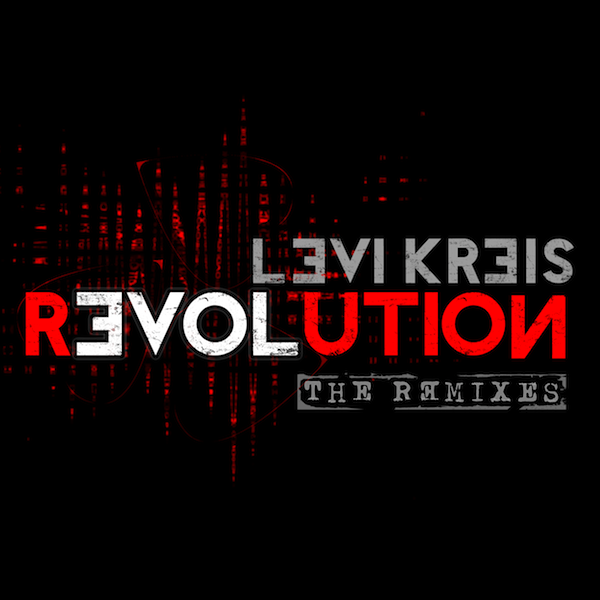
Empowerment is on extended play. “Love Revolution (feat. QBoy)”—the sweet, soulful uptempo second single from Levi Kreis’s latest album, Imagine Paradise—has gotten remixed, with stunning contributions from Willie Ray Lewis, who produced the original radio edit with Drew Kapner, Day. Beat, Bluetrax, No.Ma.D, Golishevsky, and DeepSoundEffect. A Tony Award-winning actor and singer/songwriter, Kreis combines an old-school musical sensibility with rainbow-funk hip hop for an anthem that rivals the best of Janet and Sylvester and will surely bring people together on the dancefloor and across communities.

Tell Me More: Love Revolution: The Remixes is available in a variety of digital formats, including high-quality MP3 and FLAC, among others. Who Benefits: Until November 4, one-hundred percent of the proceeds of the EP go to Positively Living, a Knoxville, Tennessee-based not-for-profit social service agency that provides housing and care for persons that are homeless and living with HIV/AIDS, mental illness, addiction, or a physical disability. How Much: Fans can bump up the price from $10 and donate what they wish! How to Order: Log on to: www.levikreis.bandcamp.com or visit iTunes (price is set).

 0  190

by Ruby Comer

Photo © Mike Maroney. All rights reserved
Call me an Old Fart. I just can’t get used to these fandangled hi-tech contraptions—DVRs, iPods, DVDs, computers, faxes, cells, and on and on. Who can figure them out? Certainly someone younger and brighter than me—like KDrew. This singer/songwriter has shoehorned his musical talents through FaceBook to acquire a fan base that started with 2,000 and in just sixty days grew to 85,000! The exposure has landed spins of his song, “Bedroom,” on radio stations and his song, “Defeated,” can be heard on the Internet.

A former high school athlete whose father was a rock drummer, KDrew is self-taught on piano and guitar. It took Ms. Ruby nine grueling years of lessons to learn an instrument! His sound can be difficult to label, but it’s best described as pop-R&B. KDrew’s songs go from ballads to bounce because he doesn’t want to limit himself. “I love all kinds of music!” he cheers. Apparently the guy enjoys lending a hand, as well. He’s Celebrity Ambassador for AIDS Resource Foundation for Children (ARFC), a New Jersey organization that since 1985 has provided holistic care for orphaned babies living with HIV and their families. Over the years, the group has expanded to include a wide variety of comprehensive support services.

After KDrew’s concert at Richard J. Codey Arena in West Orange, New Jersey, to benefit ARFC, yours truly met up with the talent backstage.

Ruby Comer: What a spectacular performance! [He smiles appreciatively exposing his Chiclets smile.] How did you come by the name KDrew?
KDrew:
Well, when I played basketball in high school, my teammates decided to shorten “Kevin Drew” to KDrew just like Jason Kidd changed his name
to JKidd.

Ah, got it. Has the AIDS epidemic affected you?
It really makes me put more consideration into the women I might have sexual relations with. I’m an AIDS-prevention advocate and want to promote safer sex and other effective contraceptives.

Well bust my button, Bucko, we need more like your kind! Have you lost anyone close to you from AIDS?
No I haven’t personally. I hope all of my friends and family are smart when it comes to safe sex and aware of this epidemic.

Do you remember where you first heard about HIV/AIDS?
Being a basketball player, I became aware of it when Magic Johnson was diagnosed with the disease.

Of course, yes. Were you taught AIDS prevention in high school?
Yes. I attended Howell High School in New Jersey. The school and teachers really stressed the importance of HIV/AIDS. I think they did a great job. The reason being, none of my friends or family have the disease.

That’s a good deduction! I hope other high schools take note, too. Are you currently in a relationship, KDrew?
I’m single, but always looking for the right person. [He pops a grin on that chiseled face.]

[Oh, if I were only one hundred years younger!] Have you always used a condom while playing?
Honestly, there have been many times I have gone without contraception. But I had a deep trust with her and we both knew we were safe. [A girl comes up to him and asks for an autograph. He signs her concert ticket.] Ruby, I’m always prepared with protection.

Thataboy. What’s coming up for you professionally this year?
I’m releasing a single titled “Dirty Dancer” and hopefully towards the end of the year I will drop an album that will change music!

Yessirreebob, I like the attitude, kiddo. It’s similar to the cool come-hither one you exhibit on stage.
I’m also in preparation for a concert I’m giving on World AIDS Day. [My eyes brighten.] My goal is to have people trust me as an artist so they will get motivated to join in the fight against AIDS. Just because you don’t have it [HIV], doesn’t mean you can’t help fight it!

Your leadership is admirable and inspiring. Who’s been your musical inspiration, KDrew?
Michael Jackson and Bruce Springsteen. Michael’s Bad was the first album I ever bought.

Great album! How I miss him and his music. [He nods.] What kind of music do you listen to?
I listen to all genres, everything from Michael Jackson to Chris Cornell. I’m a huge Coldplay fan and a die-hard Red Hot Chili Peppers fan. Everything about music inspires me!

Tell me what prompts you to get involved with the epidemic, like volunteering for ARFC?
Now that I have a fan base as a musician, I feel more obligated to keep my fans informed and let them know how serious AIDS is. One wrong move, like being unprotected, can completely change your life. It’s a very unfortunate disease, but as long as I’m on this earth I will push awareness and do whatever I can to prevent and—hopefully one day—cure AIDS.

Draw closer to KDrew by logging on to www.KDrewMusic.com or visiting his Facebook page. For more information about ARFC log on to: www.aidsresource.org.

Ruby Comer is an independent journalist from the Midwest who is happy to call Hollywood her home away from home. Reach her by e-mail at MsRubyComer@aol.com.

June 2011