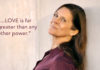
Closeup
Actress & Project Reina founder Gina Ravera helps young women maintain healthier lives
by Dann Dulin

Photographed Exclusively for A&U by Annie Tritt
Think of Gina Ravera as a bridge. Well, not the Golden Gate Bridge, though San Francisco is her hometown, but more of a link between health and women. In 2007, she established Project Reina (PR), a pro-wellness nonprofit organization dedicated to reaching out to teens and twenty-somethings to prevent HIV infection, with special focus on Latinas and African Americans, Gina’s combined heritage.
According to a 2006 Centers for Disease Control report, 22,000 youngsters aged ten to twenty-four were living with HIV in America, and a large portion of them were female. When Gina heard these stats, she was mortified. “I view the war against HIV/AIDS as the Civil Rights movement of my day,” declares Gina with strong conviction. “The rate of infection is going down globally, but in the U.S., the rate of infection hasn’t budged in over a decade. 1.2 million people in the United States have HIV. More than half a million Americans have died from AIDS and half of all people diagnosed with HIV in the United States are African-American. More than one-quarter of new HIV/AIDS cases in the United States are women and most of the new cases among women are Black. AIDS is the leading cause of death for African-American women ages twenty-five to thirty-four.” Gina recites these figures as if Detective Irene Daniels, the strong character she played in the TV crime drama series The Closer, were competently testifying in a murder case, intelligently stating her well-researched facts.
In fact, she was starting Project Reina when she was on The Closer, where she met the project’s future Director of Production, Anna Notarides, who was working as an assistant director on the series. Says Gina: One day I was working on Reina material on my computer between scene set-ups and Anna wanted to know what I was working on. And why she no longer had to rally me to set. My desk on the show had become Project Reina headquarters. I never left my chair. At that point Project Reina was evolving from concept to reality; it was a lot of work. Anna said, ‘I’m guessing you need help. You can count me in. I am down for the cause, whatever I can do.’ And with that, she helped set up, produce, and made sure every event ran smoothly. I am in awe of her tireless support and commitment and deeply appreciate everything she has done for Project Reina.”
“I set out to create a bridge to unite people, to increase awareness, compassion, personal responsibility, and to assist in defeating HIV/AIDS,” Gina explains with her trademark sassy voice that’s evident in characters she’s played, like Dr. Bettina DeJesus on ER and in the films The Great Debaters, Soul Food, Kiss the Girls, and Showgirls. She also appeared in the popular turn of the century TV series, The Time of Your Life.
Project Reina is Gina’s response to losing individuals who educated and encouraged her while growing up. “Many of the most influential people in my life are no longer on the planet because of this disease. I’ve lost teachers, mentors, and friends. Given how hard the creative community was hit, I feel that the American culture,” she pauses and inserts, “the world, has been greatly robbed of the contributions of several generations of artists. The lives of so many bright and talented individuals ended far too soon. I wonder what the world would look like today had those young artists lived long enough to do their thang?”
Gina first heard the word “AIDS” from another kid in the school cafeteria. “He whispered it,” she notes in a soft, reminiscent voice. “It would be many years later that I would learn what the words ‘HIV’ and ‘AIDS’ meant and that the two were not interchangeable.” When asked what she instantly thinks of when she hears about the epidemic, she replies, “I envision ‘All the Individuals Determined to Succeed’ in finding a cure and saving lives. The heroes in the epidemic are all those living with HIV and AIDS who extend their voices to protect the health and well-being of young women, men, and children.”
She continues. “AIDS has always affected my life. I’ve never known a world without AIDS. It was a scary time when I was coming of age.” Gina bristles when thinking of those early days. “Daily reports of the rising death toll were on TV and in the newspapers. I was also just beginning my training in the arts and so I got an up close and personal look at the effects of AIDS. In the early days, there was a lot of fear and misinformation about what AIDS was and how the disease was transmitted. I remember when people were afraid to even touch anyone they suspected could be infected,” she asserts with disdain. “Back then we didn’t have Google and so people talked, shared information, and educated one another. Ignorance was not able to take a strong foothold in my community for long.”
With this backdrop of death, Gina says it was not an option for her to have unprotected sex. Even so, Gina gets tested every year. She also tests at the beginning and ending of a relationship, and sometimes even during.
A child of the Civil Rights Movement, the anti-war movement, and the women’s movement, Gina was raised with a potent belief in the 
Gina explains how she came to name her organization Project Reina. “Reina is Spanish for the word ‘Queen.’” For us especially, it is a term of deep endearment,” she points out and carries on. “Una Reina is one who is precious, preciosa, one who is divine, divina. Una Reina is a woman of any age, color, or creed who accepts the responsibility for her own care and well-being. She honors her body, mind, and soul. But she is not selfish. Rather, she is certain that self-esteem is the bedrock for a rich and meaningful life. With self-confidence, she tends to all aspects of her life—her education, career, health, family, friends and relationships—as if they were all part of a garden; taking care to plant seeds that will bear only the sweetest of fruits: self-love.” She takes a short breath and joyfully utters, “Long Live the Queen.”
Gina’s idea for Project Reina emerged after attending Kaiser’s International Summit on HIV/AIDS in 2006. At one point during the seminar, José M. Zuniga, MSPH, PhD, President/CEO, IAPAC, asked the question, “How do we reach these girls?” posing the idea that prevention should be made sexy. “Project Reina was my answer to that question,” she states emphatically, in a modest tone. Yes, Project Reina deals with HIV prevention, but it also instills esteem and reverence for one’s own existence. This is done through the support of fellow actors, who Gina refers to as “hermanas” (sisters), Angel Moore, Ana Ortiz, Teresa Randall, and Lisa Vidal. They reach out to adolescent girls and young women, talking to them in their own language and sharing their own life experiences, essentially just being a Big Sister to them. They encourage these girls to be tested as well as to get their partners tested too. “Most [of these girls] have absolutely no idea how vulnerable they are,” remarks Gina matter-of-factly, with a slight dip in her voice.
Just as each character Gina portrays has many facets, her organization is multifunctional as well. They host and participate in community outreach programs and assist other nonprofit organizations that promote awareness and prevention like AIDS Project Los Angeles, Common Threadz, and Until There’s a Cure. “Our aim is to reach those who, to date, have been hardest to reach and hardest hit in the U.S. by the HIV/AIDS pandemic—young African-American and Latino American women and girls, ages thirteen to twenty four. In hopes of lasting behavioral change, information is shared in a culturally and socially relevant manner.”
For her part in Common Threadz (the nonprofit assists children and their African rural villages by providing programs that empower them), Gina has teamed up with artist Budi Kwan to provide the organization with originally designed T-shirts that are for sale through Common Threadz. For each T-shirt sold, an African orphan will be supplied a school uniform. (Common Threadz also gives $5 to Project Reina for each shirt sold.) Most schools require a school uniform and the uniforms generally last for one year, so there’s an ongoing need  for them. On its Web site, Common Threadz reports that just in South Africa alone, there are 1,400,000 orphans due to AIDS.
With the exception of one paid staff member, most of Project Reina is made up of volunteers—other actors, writers, and industry folk that Gina has recruited. “I hope that Project Reina’s committed group is able to help in the race to get to zero: zero new HIV infections, zero discrimination, and zero AIDS-related deaths,” she boasts in an excited manner. “For those who are HIV-positive, we are dedicated on their behalf to educating all people about the virus and the overwhelming need for love and compassion.”
Gina’s fervor is infectious and admirable, and she certainly is a role model. The person she looks up to is Geoffrey Canada, a visionary and pioneer. He serves as president and CEO of the Harlem Children’s Zone (HCZ), a nonprofit that provides social and educational services for Harlem children. HCZ’s motto is: “Doing whatever it takes to educate children and strengthen the community.”
As Gina settles into the New Year, she has her hands full with the organization. Project Reina was hoping to open an East Coast branch late last year, but, due to nationwide budget cuts, they have not been able to expand. “Fingers crossed, in 2013 we hopefully will have the funds to so,” enthuses Gina. “I believe that as long as there is hope and resolve, a cure will be found and that one day there will be a world without HIV or AIDS. Until that day arrives, prevention is key.” And Gina is closing the gap on that.
Special thanks to photography assistant Victoria Wollard and to RPM Studio in West Toluca Lake, California, for the generous use of its space.
For more on the photography of Annie Tritt, log on to www.annietritt.com.
For more information about Project Reina visit www.ProjectReina.org.
Dann Dulin interviewed Tricia Helfer for the December 2012 cover story.
Read this article in our digital edition on our site by clicking here (or off-site by clicking here.)